Showing posts with label Illustration. Show all posts

Thursday, July 14, 2011

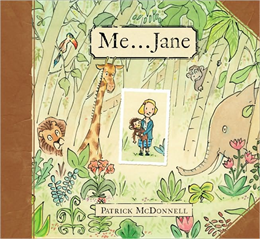
"Me...Jane" by Patrick McDonnell

Image Courtesy of: http://www.savvyauntie.com/Admin/Images/Product/Thumb500x239/Product_gifts-me-jane-patrick-mcdonnell-savvyauntie_1552740855.JPG
Bibliographic Citation
Title: Me…Jane
Author/Illustrator: Patrick McDonnell
Year of Publication: 2011
Publisher City: New York
Publisher: Little, Brown and Company
ISBN: 9780316045469
Author/Illustrator Website: http://muttscomics.com/
Media Used for Artwork: Ink, Watercolor

Copyright 2010/2011

My Top 10 Favorite Picturebooks for Older Readers

Awards
·         Hicklebee’s Book of the Year, 2011

Annotation
A fictitious story of Jane Goodall’s life as a child and how even from a young age she dreamed of travelling to Africa and helping animals, with the help of her stuffed toy chimpanzee, Jubilee.

Personal Reaction
                In the author’s notes it is stated that when Goodall was 10-years-old she decided that she wanted to go to Africa.  At such a young age she had a dream that she later fulfilled when she did travel to Africa observed chimpanzees.  Because of this she was able to make discoveries about these animals that no other experts had seen.  It shows that having big dreams are good and can be fulfilled with hard work and dedication.  That is why I think this book is a must read for older readers.  It is a way to inspire them to pursue their dreams and find ways to change the world for the better.
Besides writing the picture book McDonnell also illustrated it.  Some readers may recognize McDonnell from his comic strip entitled “Mutts.”  It is nice to see this author working in another setting.  Not only will this book attract readers to his other children’s books but also his comic strip.
McDonnell’s artwork is wonderful and childlike, fitting with the age of the character of Jane in the picture book.  The addition of the nature stamps on the pages make the story feel like a scrapbook and add interests to the text so it is more than just words.  Jubilee, the stuffed toy chimpanzee, appears to be real in the illustrations.  Whatever adventure Jane goes on Jubilee is there to keep her company.  This is very fitting, especially with Goodall’s work with chimpanzees as an adult.
                An interesting addition to the illustrations was the inclusion of some of Goodall’s own artwork in a two page spread in the middle of the book.  The alligator on the page is part of “The Aligator Society” that she created and led as a child.  This makes the idea of a child having dreams and working to fulfill those dreams all the more realistic.  Also readers can relate to Goodall, because she once was a child too and had her own artwork.
                For readers who are interested links are provided to get more information of Jane Goodall at her website here and also her program Roots & Shoots here.

Thursday, July 7, 2011

"Beowulf" by Gareth Hinds

Image Courtesy of: http://www2.scholastic.com/content/images/articles/sn/sn_beowulf_cover.jpg
Bibliographic Citation
Title: Beowulf
Author/Illustrator: Gareth Hinds
Year of Publication: 2007
Publisher City: Cambridge
Publisher: Candlewick Press
ISBN: 9780763630232
Author/Illustrator Website: http://www.garethhinds.com/
Media Used for Artwork: Ink

Fiction Graphic Novel

"The Classics Revisited" Group Project-  Please visit our presentation here to learn more about how this graphic novel and others can be used in a high school curriculum.

Annotation
Follow the epic tale of Beowulf, in graphic novel format, as he battles barehanded against the evil monster called Grendel, vanquishes Grendel’s vengeful Mother, and fights his final battle against a rampaging dragon in order to protect his kingdom.

Personal Reaction
(Provided by J. Medina)
I really enjoyed this graphic novel adaptation of the epic poem, Beowulf. Hinds did a good job depicting Beowulf and the monsters. The wordless pages which depict certain scenes carries the plot better then if text had been incorporated. Hinds states on his website that the Candlewick Press version of Beowulf is slightly different from the first draft that he self-published. Candlewick Press chose A.J. Church's "more straightforward prose" whereas Hinds originally chose to use Francis Gummere's "more archaically-flavored" translation. I personally liked the choice of wording in the Candlewick Press version, it flowed well and suited the young adult graphic novel audience. An overly archaic worded translation I believe would be off putting to the reader.  This adaptation of Beowulf successfully tells the tale of Beowulf on its own, but I would still recommend using it as a supplement in the current curriculum.

Use of Onomatopoeia: [There are several instances present throughout the text, often incorporated into the graphics rather then the word bubbles]. "Boom" - text seems to be coming from the hall doors as they are opened.  "Crunch" - text is closely wrapped near Grendel's mouth as he bits a man's head.  "Smash" - written in line with Beowulf's arm and body motion as he drives Grendel's body into a table.

Use of Rhythm: [The wording of Beowulf's speech has a particular cadence that gives the reader a sense of it being presented to a large audience. The '/' represents where the reader might put an emphasis when reading aloud.]
Therefore/ I shall carry neither sword/ nor shield/ nor coat of mail/ to this battle. With the grip of my hands only/ will I confront this enemy,/ struggling with him, / life for life./ But who shall live/ and who shall die,/ let it be/ as God/ shall will. 

Use of Personification: [Fate is personified as someone who gives orders that cannot be disobeyed]. "But that which Fate has ordered shall come to pass."

Use of Simile: The image of the ocean is replaced with a map of the constellations thus likening the ocean to the sky. 

Curriculum Connection: Grades 9 to 12 Reading Literary Response and Comprehension
California Standard: Narrative Analysis of Grade-Level-Appropriate Text - Read literary texts and use detailed sentences to describe the sequence of events [Read and describe in detail the events that occur in the Beowulf story].  Structural Features of Literature - Identify several literary elements and techniques (e.g., figurative language, imagery, and symbolism); Read and identify ways in which poets use personification, figures of speech, imagery, and the "sound" of language; Identify the functions of dialogue, scene design, and asides in dramatic literature.

Media Used (discussed in detail): The story of Beowulf is divided into three separate books: Book 1) Beowulf vs. Grendel - which was drawn in ink by using a dip pen and brush, then colored digitally; Book 2) Beowulf vs. Grendel's Mother - which was drawn on painted wood panels using technical pen, watercolor, acrylic, and color pencil; and Book 3) Beowulf vs. the Dragon- which was drawn in ink by using a dip pen and brush, then colored using Dr. Martin's dye and white charcoal. Hinds brilliantly depicts the fighting scenes which are so essential to the story's plot. The jumbled snapshots of Beowulf rolling around, grappling with the monsters, mimic the chaos present in a live fight. Book 1 and Book 3's illustrations were my favorite which I attribute to Hinds' use of drawing with ink with dip pen and brush. I especially like how Hinds uses a map of the constellations as the background image for the dead warrior's pyres on the ocean and for the sky as seen through the banquet hall. The constellations were an eye drawing focal point which had me seeking out the ones I knew. Appropriately accenting Beowulf's death in Book 3, the sober hues are a stark contrast from the vibrant colors used to depict Beowulf's victories.

Wednesday, July 6, 2011

"Amelia and Eleanor Go For a Ride" by Pam Munoz Ryan, Illustrated by Brian Selznick


Image Courtesy of: http://lookingglassreview.com/assets/images/Amelia_and_Eleanor_go_for_a_ride.jpg
Bibliographic Citation
Title: Amelia and Eleanor Go For a Ride
Author: Pam Munoz Ryan
Illustrator: Brian Selznick
Year of Publication: 1999
Publisher City: New York
Publisher: Scholastic Press
ISBN: 059096075X
Illustrator Website: No Illustrator Website
Media Used for Artwork: Pencil

Awards
·         American Library Association’s Notable Children’s Book, 2000
·         NCSS/CBC Notable Social Studies Trade Book, 2000
·         International Reading Association’s Notable Book for Global Society, 2000
·         Parenting Magazine Reading Magic Reward, 1999
·         New York Public Library’s Best Children’s Book List, 1999

Annotation
In the evening on April 20, 1933 aviator, Amelia Earhart, and First Lady of the United States, Eleanor Roosevelt, sneak away from a dinner party at the white house to fly over Washington D.C.

Personal Reaction
                This story is a wonderful find for anyone who is inspired by Eleanor Roosevelt and Amelia Earhart.  Both women did extraordinary things in a time when women weren’t expected to do anything out of the ordinary.  It is nice to see that this fictitious story is based on an actual event and that they were friends in real life.  Ryan did a great amount of research (finding photographs and newspaper articles, even providing Roosevelt’s recipe for Pink Clouds on Angel Food Cake) to help readers imagine what actually occurred on that night, like they are reading an article in a newspaper.
                Historical fiction is a popular genre in novels.  This picture book is a good introduction to older readers who may want to read a novel but aren’t sure if they would like historical fiction.  The addition of the illustrations adds to the feeling that a reader is reading the story in the local paper since they are similar to photographs.
                The illustrations are unique in the fact that they were created using pencils.  Of the wide variety of picture books that I have read I have not found another book illustrated in this manner.  One has to appreciate the amount of time Selznick spent on drawing each illustration.  A reader can see each stroke made to create a picture.  It is amazing to see the individual strands that made up Roosevelt’s hair, the leaves and flowers on the trees outside the White House, and the view of Washington D.C. at night.  The use of the black and white illustrations is similar to a photograph from the area, which seems fitting with the addition of an actual photo of Earhart and Roosevelt on their flight at the end.

Monday, June 27, 2011

"The Odyssey" by Gareth Hinds


Image Courtesy of: http://www.graphicnovelreporter.com/sites/default/files/odyssey_0.jpg
Bibliographic Citation
Title: The Odyssey
Author/Illustrator: Gareth Hinds
Year of Publication: 2010
Publisher City: Somerville
Publisher: Candlewick Press
ISBN: 9780763642662
Author/Illustrator Website: http://www.thecomic.com/
Media Used for Artwork: Pencil, Watercolor

Fiction Graphic Novel

Copyright 2010/2011

Awards
·         Kirkus Reviews Best YA Books of the Year
·         American Library Association’s Great Graphic Novels for Teens nominee
·         Kids Indie Next List
·         The Horn Book Starred Review
·         Booklist Starred Review

Annotation
A graphic novel adaption of Homer’s epic poem “The Odyssey” in which we follow Odysseus’ journey and his many adventures to reach his home of Ithaca and his wife, Penelope.

Personal Reaction
                It is clear that Hinds did his research when it came to adapting the epic tale of Odysseus.  At the end of the novel he discusses the different translations he used as reference when writing the graphic novel version, making this a rather accurate interpretation.
                This novel will work well for older readers because it lays out a complicated story in a way that they can follow.  For example, the story begins with Telemachus’ journey instead of his father’s.  This helped to set an understanding of the actions of all of the characters.  Also, the common themes become more apparent in this version instead of being lost in the poetic language that is found in other versions.
                The illustrations have a rawness to them that was given because of the work with the pencil.  It adds to the grittiness of the battles and also the moments at sea where Odysseus and his crew fight against the waves.  The colors chosen were muted with browns, adding an age to them, making it almost feel as if the graphic novel was written a long time age.  The aged affect reminders a reader of the fact that “The Odyssey” has been told for a very long time and it still endures.  One of my favorite characterizations of Hinds is from how he draws the gods.  They are drawn with one color instead of several colors like the mortals.  For example, Athena is blue.  So when she is ever in the novel she stands out from the rest, showing her authority as a goddess.

Curriculum: Grade 9 English: “The Odyssey” is a requirement for students to read in this grade.  This graphic novel version is a good addition to reading the other version chosen for the class.  This version is written in modern terminology so students can pick up on things that they may have missed in other versions.  The addition of the illustrations can help them to visualize what occurs during Odysseus adventures.  The graphic novel can reinforce the story for students to help with interpreting.

Monday, June 20, 2011

"Surfer of the Century: The Life of Duke Kahanamoku" by Ellie Crowe, Illustrated by Richard Waldrep

Image Courtesy of: http://ecx.images-amazon.com/images/I/51fyI7l3fHL._SL500_AA300_.jpg
Bibliographic Citation
Title: Surfer of the Century: The Life of Duke Kahanamoku
Author: Ellie Crowe
Illustrator: Richard Waldrep
Year of Publication: 2007
Publisher City: New York
Publisher: Lee & Low Books Inc.
ISBN: 9781584302766
Illustrator Website: No Illustrator Website
Media Used for Artwork: Color Pencil, Gouache

Awards
·         Asian Pacific American Award for Literature, Picture Book Winner, 2007-2008
·         Texas Bluebonnet Award, 2010-2011
·         Bank Street College Children’s Book Committee’s Children’s Books of the Year,

Annotation
A biography of Duke Kahanamoku, the father of modern surfing, during his early career as a member of the United States Olympic team for swimming and the many challenges he had to deal with, including racism and financial difficultly. 

Personal Reaction
                This book will be a draw to any older reader who enjoys surfing or swimming.  The biography of Duke Kahanamoku is done expertly in this picture book.  It is apparent that Crowe did a great deal of research to make sure that her facts were accurate about the life of the man who is the father of modern surfing. 
The picture book focuses mostly on his early career as a member of the Olympic swim team but besides stating the facts of his life, Crowe manages to bring up the racism that Kahanamoku had to endure in a subtle way so that it did not take over the entire story.  As a group, readers can discuss how issues of racism affected everyone in the past, even those who were famous.  This picture book can also be used with a group of other biographies of famous figures who succeeded despite the racial issues they had to endure.
Waldrep did an amazing job with the illustrations.  They are reminiscent of retro travel posters that were used in the era Kahanamoku lived.  The art deco style is very geometric, but the use of light colors used to represent Hawai’i softens the illustrations.   Some of the images even felt like postcards that anyone could send to family on their trip to Hawai’i.  One of my favorite images is one that occurs in the story where Kahanamoku introduced his style of surfing to Australians.  He holds a girl on top of his shoulders as they surf the waves.  Even though it is a still image, I can still feel the movement of the waves and the wind.
The style used in the illustrations is unique from other picture books I have seen.  Not only did Waldrep use a style of art that was popular in the era Kahanamoku was alive, it is also a style that is not seen often in current works.  But the beauty of the art deco style is wonderful and should not be forgotten.  This book is a good way to introduce it to readers.

Use of Onomatopoeia: To add to the tension of the story the author added onomatopoeia so that readers would feel they were at the race being described.
Example:
“BAM!  The pistol shot rang out.”

Use of Simile: One of the most adorable uses of a simile I have seen in a long time.  Comparing Kahanamoku to a tadpole when he first was taught to swim not only shows his age but also reminds the reader of the water.
Example:
“Wiggling like a little tadpole, Duke made his way back to the canoe.”

Monday, June 13, 2011

"The Moon over Star" by Dianna Hutts Aston, Illustrated by Jerry Pinkney

Image Courtesy of: http://www.ala.org/ala/mgrps/rts/emiert/cskbookawards/img/2009/the_moon_over_star.jpg
Bibliographic Citation
Title: The Moon over Star
Author: Dianna Hutts Aston
Illustrator: Jerry Pinkney
Year of Publication: 2008
Publisher City: New York
Publisher: Dial Books for Young Readers
ISBN: 978-0-8037-3107-3
Author Website: No Author Website
Media Used for Artwork: Watercolor

2009 Students’ List

Awards
·         American Library Association’s Coretta Scott King Illustrator Honor Award, 2009

Annotation
The story of a young narrator on the day that mankind first landed on the moon in 1969.  But the story is also about the narrator realizing more about her grandfather and his life.

Personal Reaction
                While this story is about a family in a town called Star watching the moon landing in 1969, there is another story going on as well, the story of Mae and her grandfather.  The family watches in amazement as the world changes by a group of men going to space, except for one member, Mae’s grandfather.  It is told how he thinks the space program is a waste of money.  As the story continues Mae begins to see how hard her grandfather has worked and where his views come from, and yet she still is fascinated and excited by the spacewalk.  One of the sweetest moments of the book is at the end when the grandfather tells his granddaughter to keep dreaming but to always remember the importance of home.
                On one level this book is about the moon landing, but on another it focuses on the people who were observing the event from a distance.  Readers can relate to the characters of Mae and her siblings because they have also been in the same position when dynamic things have occurred in the world that they were not directly involved in but where part of it none the less.  Some examples of this in recent history include: the events on 9/11, the death of Osama bin Laden, the tsunamis, the earthquakes in New Zealand and Japan, and so on.  Though they were not directly involved they still remember the news reports, such as Mae remembered Walker Cronkite saying “Man on the moon!” on the television.
                The watercolors in this book are beautiful.  The detail allows readers to actually see the age of the Grandfather that the narrator describes as well as the details of the families household and even the astronauts’ footprints on the Moon.
What is also interesting is the variety of images in the book.  The illustrations work with the narrative to visually tell the two stories that are going on: the walk on the Moon and Mae’s interaction with her grandfather.  With just a flip of the page a reader is brought to outer space then back to the family in the town of Star.  The visuals help to transition the reader back and forth between settings without jarring them by the suddenness.
One of the most powerful images is a double page picture of a rocket launching, which the children imagine while pretending to be astronauts in their front yard.  The reader is struck by the iconic nature of the image.  It is easy to understand how the children remember the many details of a rocket launch since they are currently living it and are bombarded by those detailed on television.

Use of Symbol: Star in this part of the novel is a symbol for Mae’s family and home.
Example: “Keep on dreaming, Mae,” he said.  “Just remember,
We’re here now together
On the prettiest star in the heavens.”

Use of Repetition: The story is divided into different sections and to indicate the beginning of a new section it starts with “Once upon a summer’s…”  It is the last word only that changes, showing the passage of time.

Sunday, June 12, 2011

"Cinderella Skeleton" by Robert D. San Souci, Illustrated by David Catrow

Image Courtesy of: http://mediamacaroni.com/wp-content/uploads/2009/10/cinderellaskeleton.jpg
Bibliographic Citation
Title: Cinderella Skeleton
Author: Robert D. San Souci
Illustrator: David Catrow
Year of Publication: 2000
Publisher City: New York
Publisher: Silver Whistle
ISBN: 0-15-202003-9
Illustrator Website: http://www.catrow.com/
   A video of Catrow drawing Cinderella Skeleton: http://vimeo.com/6650302
Media Used for Artwork: Pencil, Watercolor

My Top 10 Favorite Picturebooks for Older Readers

Awards
·         International Reading Association Children's Choices, 2001

Annotation
This picture book is a retelling of the fairytale Cinderella with a few unique twists that morph the world many are use to.  Cinderella is no long a beautiful living girl but instead a decaying skeleton.

Personal Reaction
                This isn’t the Disney version of Cinderella that people are use to; it is a reinvention of the story that is far closer to the darker, bloodier version by the Brothers Grimm.  No toes or heels are cut off in “Cinderella Skeleton” but foot bones are snapped off with ease.
                The story of “Cinderella Skeleton” is told as a poem.  Robert D San Souci used the rhythm scheme he created to his full advantage, while not taking away from the telling of the story.  The author must have been aware that his choice to make Cinderella a corpse could become quickly dark and choose to use humor to lighten the mood.  An example of this is that house in which Cinderella Skeleton resides “invites guests to REST IN PEACE.”
“Cinderella Skelton” will attract older readers who aren’t drawn to happily ever after Disney versions of fairy tales any more but still like fairy tales.  After reading this retelling, a reader can start searching out retellings of fairytales that are novel length, such as “Beastly” by Alex Flinn (or even watching the movie adaption).  The story of Cinderella is the one that readers know by heart but the reinvention of the characters and setting allows reader to see the story from another perspective.  It is also a way to teach that certain basic stories are constantly used throughout literature but are morphed to fit an author’s ideas or illustrator’s design.
The artwork is what drew me to this book in the first place.  Cinderella in this case is a skeleton with “teeth like polished kidney stones” and “dankish hair” that Prince Charnel (a very creative renaming of Prince Charming) adores.  One almost feels that David Catrow was inspired by Tim Burton films.  There are touches of Jack Skellington from “The Nightmare Before Christmas” and the bride from “Corpse Bride” in the illustrations.  Catrow illustrated the skeletons so that they would have such expressions and personalities.  And Cinderella Skeleton’s silk gown of spider web has a frightening elegance to it.  Beauty presented in an unexpected way.  Though the skeletons could be seen as frightening to some, others will be delighted in the humor Catrow also uses in his drawings.  For example: the carriage that takes her to the Halloween Ball is a funeral wagon, and instead of a mighty steed Prince Charnel rides a bicycle to search for his lost love.  Overall, this is a delightfully morbid retelling of a classic fairytale that is enhanced by the illustrations.

Use of Rhyme: Each stanza is broken up the same wait.  The first line always begins “Cinderella Skeleton,” and the rhythm scheme after is ABBCCA throughout.

Use of Alliteration: Throughout the poem repetition of the first letter of the word is used.  Some examples include:
Decayed, decrepit-what a fright.”
“And firmly packed with spite and spleen.”

Use of Onomatopoeia: Making a word from a sound is used a few times in this picture book.  Some examples include:
“Saw witch touch wand- Tip-tap!-to all.”
“Ignoring the thump of her footless stump.”

Use of Repetition: Throughout the story each stanza starts with Cinderella Skeleton.